
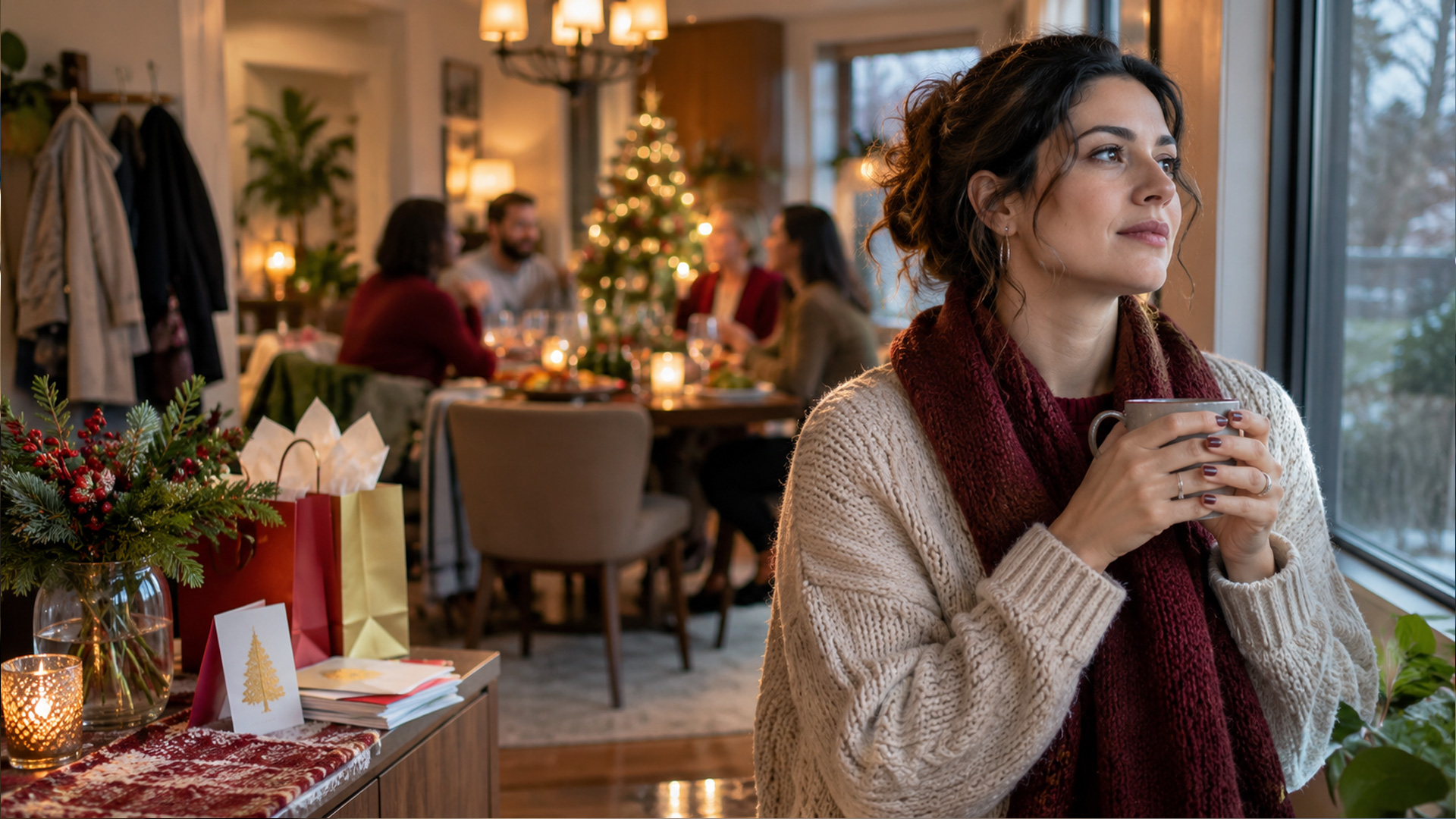
 The holidays are supposed to be the most joyful time of the year. For many adults, they are also the most crowded: more events, more spending, more travel, more family history gathered in one room, and less sleep.
If your chest tightens a little when the first holiday commercials appear, you are far from alone.
In the American Psychiatric Association’s Healthy Minds Poll from November 2025, 41% of adults in the United States said they expected more stress during the holidays than the year before, up from 28% the previous year. Among adults aged 18 to 34, the figure was nearly half.
This guide looks at why holiday stress and anxiety build, practical ways to protect your mental health between Thanksgiving and New Year’s, and how to tell when seasonal stress may be a sign of something that deserves professional care.
Holiday stress is common and usually eases once the season ends. Planning ahead, setting realistic expectations, protecting your sleep, and setting a few clear boundaries can help a great deal. But if anxiety or low mood lasts for weeks, causes physical symptoms such as panic or poor sleep, or begins affecting work and relationships, it may be more than seasonal stress. A psychiatric evaluation can help you understand what is going on.
What Adults Worry About Most During the Holidays
The same APA poll asked adults what worried them most about the season. The most common answers were:
- Missing someone or grieving a loss: 48%
- Affording or finding gifts: 46%
- Difficult family dynamics: 32%
- Feeling lonely: 31%
None of these is really about decorations or travel plans. They are about loss, money, relationships, and connection, the very things that weigh on us all year and then land under a spotlight in December.
The poll also found that 44% of adults feel the holidays have a positive effect on their mental health. Most people feel both at once: they enjoy parts of the season and dread others. That is completely normal.
If you are grieving this year, be especially gentle with yourself. Grief often feels louder during the holidays, and it deserves room rather than pressure to “be merry.” When sadness lingers and starts to feel like something more, our article on how depression shows up in adults can help you recognize the signs.
Why the Holidays Can Make Anxiety Worse
Your Routine Falls Apart
Sleep, exercise, regular meals, and quiet time are usually the first things to go. They are also the habits that help keep anxiety in check.
Expectations Run High
Social media, family traditions, and our own memories set a high bar for the “perfect” holiday. Falling short can feel like failing.
Old Family Patterns Return
Even confident, capable adults can feel fifteen years old again at the family table. Old tensions and familiar roles can return quickly.
Money Pressure Builds
Gifts, travel, hosting, and year-end expenses can create real financial worry.
Work Does Not Slow Down
For many professionals in Alpharetta’s busy business corridor, the fourth quarter brings year-end targets, reviews, and deadlines, all running alongside holiday commitments. If that sounds familiar, you may find our guide for busy professionals seeking psychiatric care helpful.
Days Get Shorter
Less daylight can lower energy and mood. For some people, this is part of a recurring pattern explained in our article on seasonal depression in Georgia.
Alcohol Is Everywhere
A holiday drink can feel relaxing in the moment, but alcohol disrupts sleep and can make anxiety worse the next day.
You cannot control every part of the holiday season, but you can choose what deserves your energy.
Practical Ways to Reduce Holiday Stress
- Decide What Matters Most
Before the calendar fills up, ask yourself which three things would make this season feel meaningful. Protect those. It is okay to say “no” or “maybe” to the rest.
- Set a Budget and Share It
Agree on spending limits with your partner or family early. Gift exchanges, shared experiences, and simple traditions can ease the pressure.
- Protect Your Sleep
Keep your wake-up time as consistent as you can, even on days off. Lost sleep is one of the fastest ways to make anxiety worse. Our guide to sleep and mental health explains why rest matters so much.
- Plan Your Exits
You do not have to stay at every gathering until the very end. Decide ahead of time how long you will stay, and drive yourself if that gives you more freedom.
- Prepare for Difficult Conversations
If a relative tends to raise sensitive topics, plan a calm response in advance, such as: “I would rather not get into that today. How is the new job going?”
- Keep Some Movement in Your Day
A morning walk, a short workout, or a few minutes of stretching between errands helps release tension and supports better sleep.
- Watch Alcohol and Caffeine
Both can intensify anxiety. Alternating drinks with water and keeping coffee to the morning can help more than you might expect.
- Stay Connected if You Are Alone
If you are spending the holidays alone, plan contact ahead of time: a phone call, a volunteer shift, a walk with a neighbor, or a meal with friends.
- Keep Up the Care You Already Have
If you take medication for anxiety or depression, continue taking it as prescribed while traveling, and plan refills before you leave town. Talk with your prescriber before making any changes.
For more calming strategies, explore our guide to holistic treatments for anxiety.
When Holiday Stress May Be Something More
Holiday stress usually eases once January arrives. Some signs suggest anxiety or depression that deserves a closer look:
- Worry that feels constant, difficult to control, and present most days
- Panic attacks, with sudden surges of fear, a racing heart, shortness of breath, or dizziness
- Physical symptoms such as stomach problems, muscle tension, headaches, or chest tightness
- Trouble falling or staying asleep for weeks
- Avoiding events, people, or tasks because of anxiety
- Low mood, hopelessness, or loss of interest that does not lift
- Relying on alcohol or other substances to get through the day
- Stress that started well before the holidays and seems likely to continue after them
If your anxiety shows up in your body, our article on the physical symptoms of anxiety may help you make sense of it. You can also learn the difference between panic attacks and generalized anxiety, and read about when anxiety starts affecting daily life.
How a Psychiatrist Can Help With Holiday Anxiety
A psychiatric evaluation can help you understand whether you are dealing with situational stress, an anxiety disorder, depression, a seasonal pattern, or a combination. It can also check for physical factors, such as thyroid problems, sleep issues, or medication side effects, that can make anxiety worse.
At Altum Psychiatry, Dr. M. Omair Ata, D.O., a board-certified psychiatrist, provides personalized anxiety care in Alpharetta that blends evidence-based psychiatry with a holistic view of your life. Depending on your needs, your plan may include:
- A thorough psychiatric evaluation
- Lab work when it is clinically appropriate
- Sleep and lifestyle strategies
- Nutritional psychiatry support
- Psychotherapy support or coordination with your therapist
- Thoughtful medication management when it is the right fit
Learn more about working with an anxiety psychiatrist in Alpharetta.
Care That Fits a Busy December
The holidays are already full. Altum Psychiatry offers flexible ways to get support without adding another drive to your schedule.
📍 In-office visits at 4385 Kimball Bridge Road, Suite 202, Alpharetta, GA 30022
💻 Tele-psychiatry by secure video for adults located anywhere in Georgia, when clinically appropriate
📞 Phone sessions when they are clinically appropriate and fit your needs
Frequently Asked Questions About Holiday Stress and Anxiety
Is it normal to feel anxious during the holidays?
Yes. In a 2025 APA poll, 41% of adults expected more holiday stress than the year before. Grief, money, family dynamics, and loneliness were the most common worries.
How can I tell holiday stress from an anxiety disorder?
Holiday stress is usually tied to the season and eases afterward. Anxiety that feels constant, is hard to control, causes panic or physical symptoms, or lasts for weeks may point to an anxiety disorder worth evaluating.
What can I do right now to feel less anxious about the holidays?
Choose your priorities, set a budget, protect your sleep, limit alcohol, plan your exits from gatherings, and keep moving. Small, concrete steps often help more than trying to fix everything at once.
Can the holidays trigger depression?
The season can bring grief, loneliness, and exhaustion, and shorter days can contribute to seasonal depression in some adults. Low mood that lasts two weeks or longer should be evaluated.
Should I see a psychiatrist or a therapist for holiday anxiety?
A therapist can help with coping skills and stressful situations. A psychiatrist can evaluate symptoms medically, check for contributing physical factors, and discuss treatment options, including medication when appropriate. Many people benefit from both.
Give Yourself the Care You Give Everyone Else
The holidays ask a lot of people. If this season feels heavier than it should, reaching out is not overreacting. It is taking your well-being seriously.
If you are in crisis or having thoughts of suicide, call or text 988 or go to the nearest emergency room.
Altum Psychiatry provides adult psychiatric care in Alpharetta, near Johns Creek, and through tele-psychiatry across Georgia. Call 404-913-3533 or schedule your appointment with Altum Psychiatry today.